
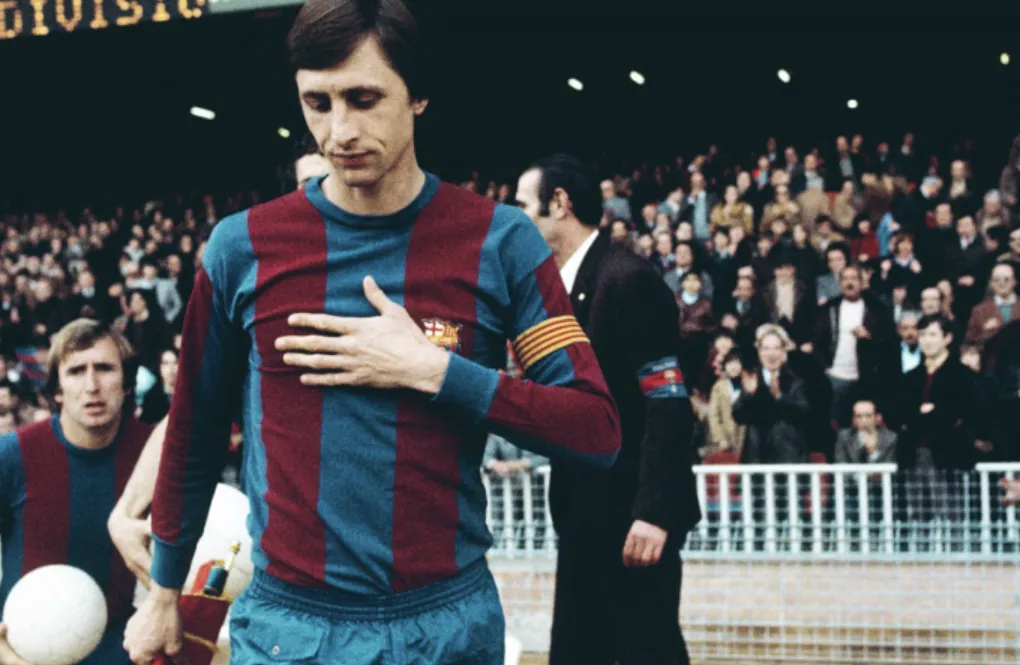
When we talk about the beauty of football, few names resonate as deeply as that of Johan Cruyff. He wasn’t just a player; he was a revolutionary philosopher whose ideas transcended generations. His influence is so profound that it has become the very DNA of two of the world’s most iconic clubs: Ajax Amsterdam and FC Barcelona. To understand modern soccer—from its tactical fluidity to its youth development ethos—you have to understand the lasting blueprint left by the Dutch master.
Today, Crickex breaks down how this visionary’s principles continue to echo through the halls of the Johan Cruyff Arena and Camp Nou, shaping the sport we love.
The Birth of “Total Football” at Ajax
Before Cruyff, football was often rigid. Positions were fixed, and players had clearly defined roles. Cruyff, as the on-field general for Ajax in the late 1960s and early 1970s, was the perfect executor of coach Rinus Michels’ “Total Football” concept.
The Philosophy of Space and Movement
Cruyff understood that football was a game of space. He famously said, “Playing football is very simple, but playing simple football is the hardest thing there is.” At Ajax, he didn’t just score goals; he dictated the rhythm. He would drop deep into midfield to collect the ball, dragging defenders out of position. Then, a winger would cut inside, a full-back would overlap, and the system would flow organically.
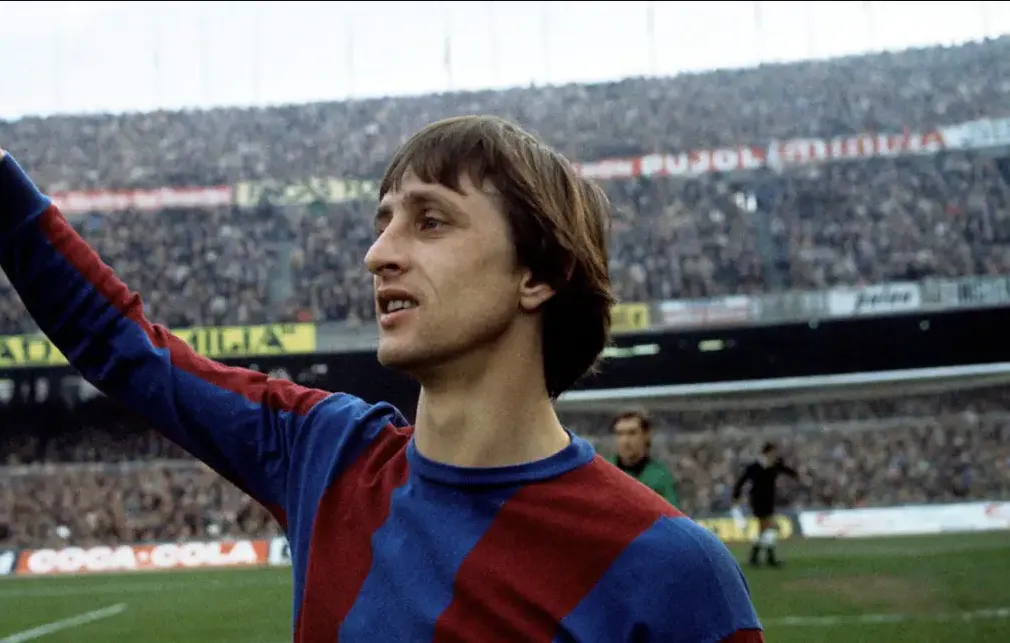
This wasn’t chaos—it was structured anarchy. Every outfield player was expected to be comfortable on the ball, capable of passing, dribbling, and defending. This relentless movement and positional interchange created a machine that dismantled opponents. The 1971, 1972, and 1973 European Cup triumphs were a testament to this.
The Legacy in Amsterdam
For Ajax, Cruyff’s impact is not just historical; it’s institutional. The club’s world-famous academy, De Toekomst (“The Future”), was heavily influenced by his philosophy. The focus on technique, intelligence, and decision-making over raw physicality is a direct result of the Cruyffian school of thought.
Today, when you watch Ajax, you see the same patterns:
- High pressing:Immediately winning the ball back after losing it.
- Building from the back:Goalkeepers and defenders comfortable in possession.
- The “Cruyff Turn”:A simple but elegant feint that became a signature move.
These aren’t just tactics; they are a cultural identity that Ajax has carried forward.
The Catalan Revolution: Cruyff at Barcelona
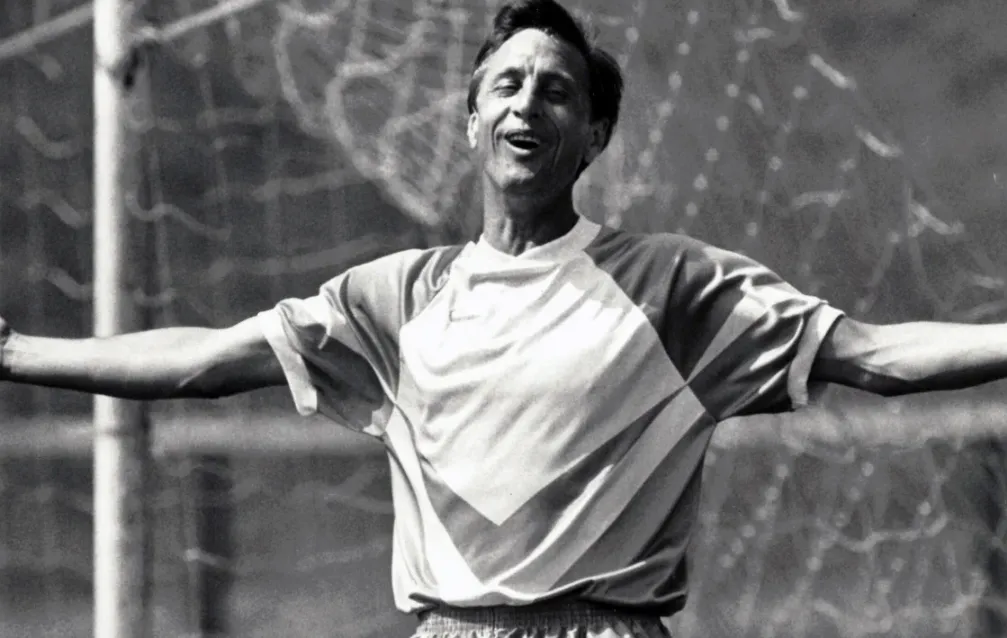
While his legacy at Ajax was immense, Cruyff’s move to Barcelona as a player in 1973 was a precursor to his most influential act: becoming manager in 1988. At the time, Barcelona was a sleeping giant, often overshadowed by Real Madrid. Cruyff didn’t just manage the club; he rebuilt it from the ground up.
The “Dream Team” and the Birth of the Modern Barcelona
Cruyff’s Barcelona won four consecutive La Liga titles (1991–1994) and the club’s first European Cup in 1992 at Wembley. But the trophies were only part of the story. He instilled a possession-based style known as “tiki-taka” in its infancy.
Key elements he introduced that define Barcelona today include:
The Diamond Formation and Possession
Cruyff often employed a 3-4-3 or a diamond midfield, which was revolutionary in Spain. The focus was on keeping the ball, not just to defend, but to attack by controlling the game. He demanded that his players be “football intelligent” (or “listo”).
La Masia: The Academy Turned Powerhouse
Cruyff’s most significant long-term contribution was his insistence on youth development. He heavily restructured La Masia, demanding that all youth teams play the same 4-3-3 system and style as the first team. This created a conveyor belt of talent that would culminate in the golden generation of Xavi, Andrés Iniesta, and Lionel Messi.
“There is only one ball, so you need to have it.” – Johan Cruyff
This simple mantra became the bible for the club. The passing, the movement, the one-touch football that dominated world football under Pep Guardiola was a direct continuation of Cruyff’s work.
How Cruyff’s Principles Changed World Soccer
The impact of Cruyff is not limited to just two clubs. His Crickex analysis reveals a global footprint that changed how coaches think.
The Coaching Tree
Cruyff’s influence lives on through his “students.” Pep Guardiola, a former player under Cruyff, is the most notable. Guardiola’s legendary Barcelona team of 2008-2012 was essentially Cruyff’s philosophy perfected. Similarly, managers like Luis Enrique, Ronald Koeman, and Erik ten Hag have all spoken about the direct influence of Cruyff on their tactical setups.
The Tactical Evolution
For decades, the 4-4-2 was the standard. Cruyff’s insistence on a fluid 4-3-3 and the use of a “false nine” (a striker who drops deep) has become standard in modern top-flight football. The modern game, where full-backs act as wingers and attackers defend from the front, is a direct evolution of “Total Football.”
Conclusion: A Game-Changing Philosophy
Johan Cruyff once said, “Playing a game is about making the right decision at the right time. If you can do that, you are intelligent.” His intelligence reshaped Ajax into a global academy, transformed Barcelona into a footballing superpower, and gave the world a new way to see the game.
From the pitches of De Meer to the halls of Camp Nou, his vision remains alive. At Crickex, we see his influence in every beautiful one-touch pass and every tactical masterclass. He changed the game not with power, but with thought.
What is your favorite memory of the Cruyff era? Do you think any modern manager truly captures his philosophy? Let us know in the comments below, and don’t forget to share this deep dive with your fellow football purists!
