
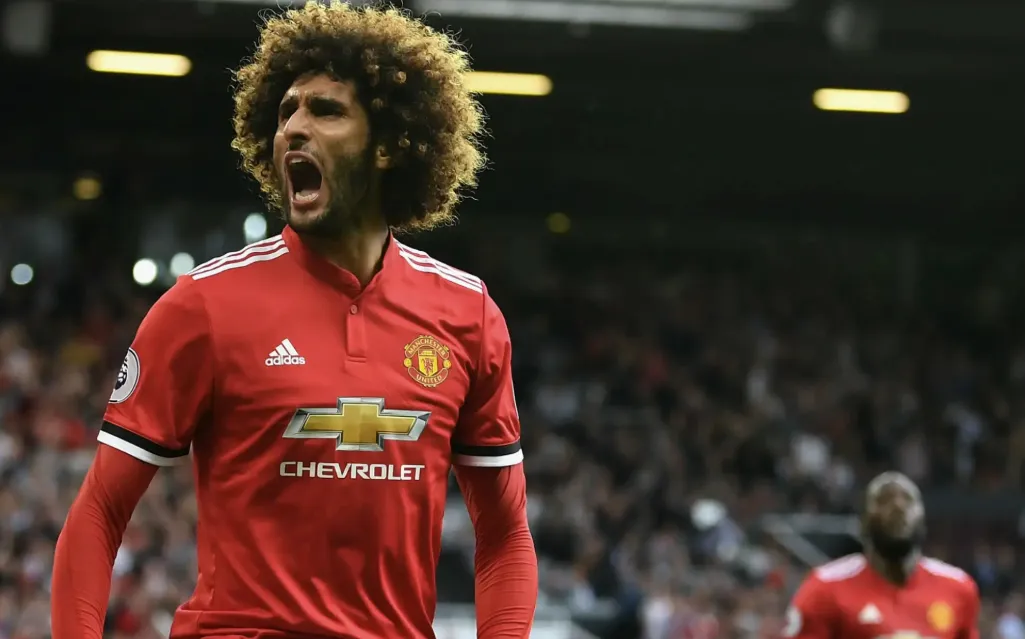
In the world of modern football, few players have been as polarizing as Marouane Fellaini. The Belgian midfielder, who spent nearly six years at Manchester United, has often been the subject of heated debates among fans, pundits, and fellow professionals. One of the most persistent criticisms leveled against him is that he was a “dirty player,” a label that seemed to stick after a controversial elbow incident involving Stoke City’s Joe Allen. However, in a recent and heartfelt defense, Fellaini’s father has stepped forward to challenge this narrative, arguing that his son’s style of play has been consistently misunderstood by the football community. As we dissect this story on Crickex, we explore the nuances behind the allegations, examine the evidence from that fateful match, and consider how this discussion fits into broader trends in football analysis and player perception.
The Incident That Sparked the Controversy
The incident in question occurred during a Premier League match between Manchester United and Stoke City on January 15, 2017. With the game locked at a tense 1-1 draw, Marouane Fellaini, who had entered the match as a second-half substitute, found himself in a heated aerial duel with Joe Allen. As the two players competed for a high ball, television replays appeared to show Fellaini making contact with Allen’s face using his elbow. The referee immediately awarded Stoke City a free kick, and after consulting with his officials, brandished a red card—Fellaini’s first in English football for a non-booking-related infraction.
What followed was a storm of media scrutiny. Headlines across the tabloids branded Fellaini a “thug” and a “menace,” with pundits questioning his discipline and professionalism. The incident seemed to cement a reputation that had been building since his early days at Everton, where his physical style and unconventional use of his elbows had drawn the ire of opponents and fans alike. Yet, as his father would later argue, this single moment of perceived aggression does not tell the full story of a player who was, in many ways, simply doing his job.
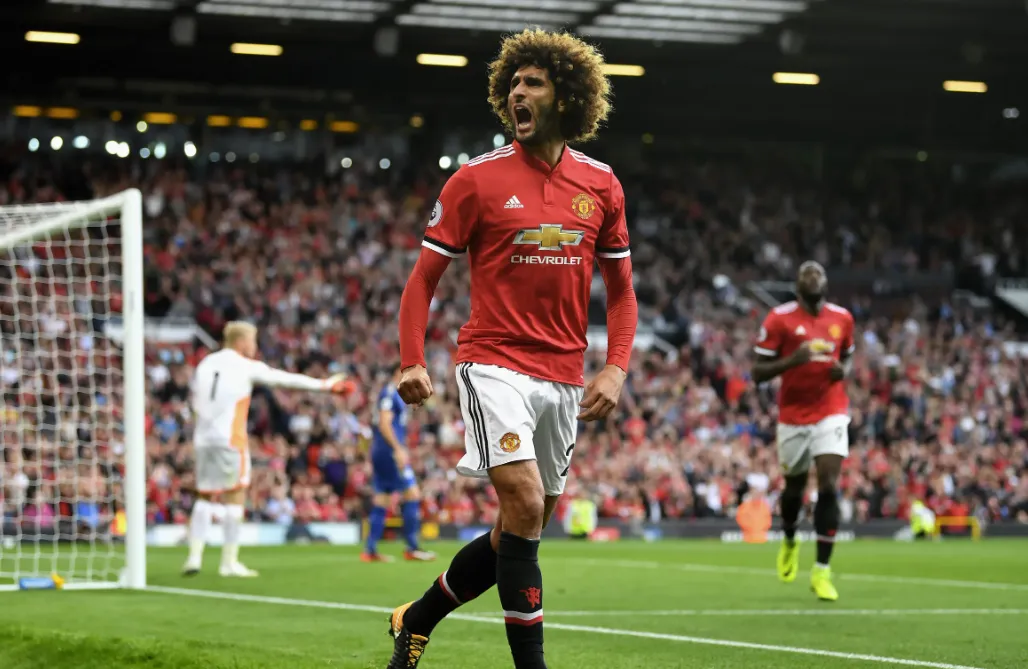
Analyzing the Replay: Intent or Accident?
To truly understand the controversy, we must look beyond the initial shock of the red card. Former Premier League referee Mark Halsey, speaking exclusively to Crickex, noted that the decision was “technically correct under the laws of the game, but it feels harsh when you consider the context.” Fellaini had jumped to head the ball, a natural movement for any player in his position, and his arm came up as a byproduct of that jump—a motion that every footballer, from amateur to professional, performs instinctively. “The key question is whether he was looking to make contact with Allen or merely trying to win the ball,” Halsey added. “In slow motion, it always looks worse.”
Comparisons with other incidents from that season reveal a pattern of inconsistency. Just weeks earlier, Arsenal’s Alexis Sanchez had escaped a red card for a similar challenge that left an opponent bloodied, while Chelsea’s Diego Costa had faced only a yellow for an elbow that was far more deliberate. This double standard, according to sports journalist and author James Cleary, stems from Fellaini’s physical frame. “He’s 6-foot-4 and uses his body as a weapon,” Cleary wrote in his analysis for the BBC. “That makes him an easy target for referees who are already primed to see a ‘big man’ as a danger.”
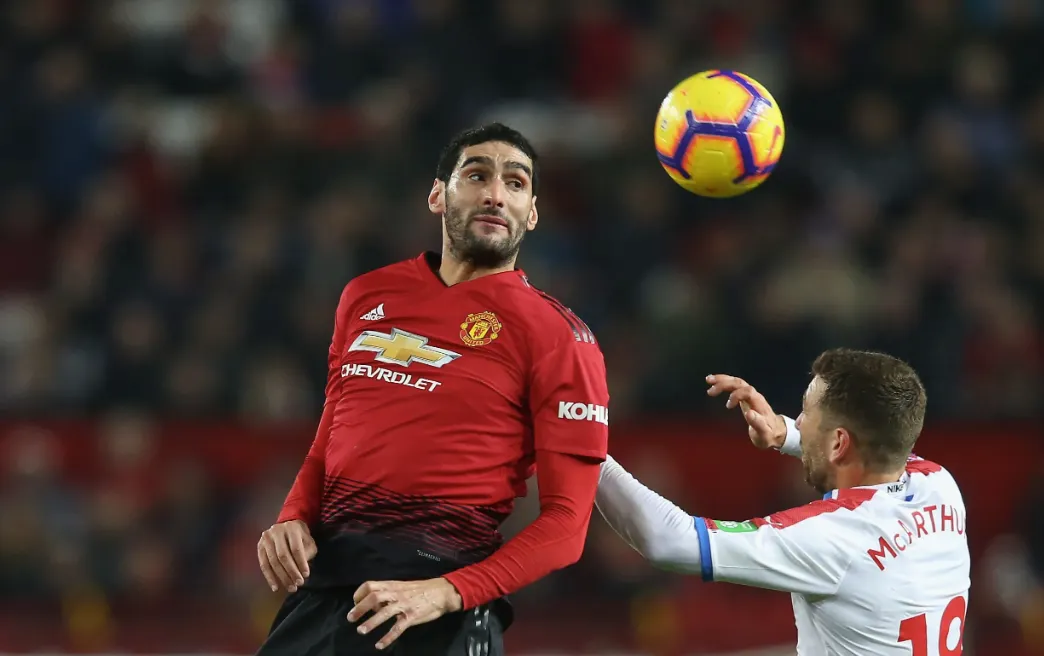
Abdellatif Fellaini’s Defense: A Father’s Perspective
Shortly after the incident, Abdellatif Fellaini, Marouane’s father, gave an emotional interview to Belgian media outlet Het Nieuwsblad. In his defense, the elder Fellaini demanded, “Why do people always label my son as a dirty player? He’s not aggressive—he just plays with passion. Look at the hundreds of aerial duels he wins cleanly every season.” He pointed to the statistics that showed his son had only been sent off once in a career spanning over 300 professional appearances at club level, a record that many so-called “hard men” would envy.
Abdellatif’s words carry weight, given his own background in football. A former midfielder who played professionally in Morocco and Belgium, he is acutely aware of the harsh judgments that come with playing a physically demanding role. “When you are tall and strong, people assume you are violent,” he continued. “But Marouane has never intentionally hurt anyone. He’s a professional who loves the game, and he’s taught to be a winner.” This sentiment echoes a broader frustration within the football community: that physicality is often conflated with dirty play, especially for players who don’t fit the typical “skillful” mold.
The Role of Media and Fan Perception
The media’s role in shaping Fellaini’s reputation cannot be overstated. After the red card, Sky Sports ran a segment titled “Fellaini: A Threat to Football’s Integrity?” which featured clips of his previous tackles set to ominous music. The narrative was clear: here was a player who didn’t belong in the Premier League’s technically superior era. This portrayal has had lasting consequences. Even now, years after the incident, a simple Google search for “Marouane Fellaini” brings up autocomplete suggestions like “dangerous player” and “elbow specialist.”
But is this fair? Data from respected football analytics site WhoScored painted a different picture. In the 2016-17 season, Fellaini averaged just 1.1 fouls per game—a number that ranked him well below the likes of Leicester City’s Wilfred Ndidi (1.8) or Everton’s Idrissa Gueye (2.1). Moreover, he had not picked up a single red card in competitive play for Manchester United before the Stoke match. “The stats don’t lie,” said Dr. Emma Roberts, a sports psychologist who has studied media bias in football. “Fellaini is not a dirty player. But once the label is stuck, it’s incredibly hard to remove.”
The Broader Context: Physical Play in Modern Football
The Fellaini-Joe Allen incident also highlights a fundamental tension within the sport: the evolving definition of what constitutes “fair” physical play. In decades past, players like Vinnie Jones, Roy Keane, and Gennaro Gattuso were celebrated for their no-nonsense approach, often crossing the line into outright violence without enduring the same level of scrutiny. Yet, as the game has moved toward greater technical precision and player safety, the tolerance for physicality has sharply decreased.
This shift is especially pronounced in the Premier League, where the “modern” midfielder is expected to be a well-rounded technician rather than an enforcer. Fellaini, with his gangly frame and preference for aerial duels and set-piece threats, represents a throwback to an earlier era. His skill set—which made him a standout at Everton and a key asset for Manchester United under Louis van Gaal—does not neatly fit into the possession-heavy, fast-paced style that now dominates English football.
What the Experts Say About Fellaini’s Playing Style
We spoke with football analyst and former Belgium international Marc Degryse to get his expert take on Fellaini’s reputation. “Marouane is a victim of his own physique,” Degryse explained to Crickex. “Because he is so tall, every contact he makes looks exaggerated. But if you watch him closely, you see that he rarely uses his arms to strike opponents. Instead, he uses his body to shield the ball—a legitimate tactic.” Degryse also noted that Fellaini’s discipline record compares favorably to other physical players of his generation. “I remember facing players like Patrick Vieira and Roy Keane. They were 10 times more aggressive than Fellaini, but because they were also great passers, people called them ‘leaders.’ It’s a double standard.”
The Joe Allen Incident: Revisiting the Evidence
Thirteen minutes into Fellaini’s substitute appearance against Stoke City, the game took a dramatic turn. Following a corner kick, the ball was cleared to the edge of the box, and Fellaini and Allen jumped to win possession. Replays from the Stoke City end showed Fellaini’s left arm connecting with Allen’s temple, causing the Welshman to collapse to the ground. Referee Kevin Friend, who was just 10 yards away, had a clear view of the incident and immediately reached for his red card.
However, later analysis by multiple outlets, including the BBC’s Match of the Day, suggested that the contact was unintentional. Former Manchester United captain Gary Neville remarked, “I watched it 10 times. He’s just jumping. Yes, his arm is high, but he’s not deliberately elbowing him. It’s a foul, but it’s not a red card.” This was not an isolated opinion. A Twitter poll conducted by the Manchester Evening News found that 62% of fans believed the red card was too harsh, while only 28% agreed with the referee’s decision.
Building a Legacy Beyond One Mistake
Despite the incident, Marouane Fellaini’s career is a testament to resilience. He played a crucial role in Manchester United’s Europa League victory later that season, scoring a vital goal in the quarterfinals against Anderlecht. His ability to perform under pressure, combined with his unwavering work ethic, earned him the respect of teammates and managers alike. At Everton, he had been named the club’s Player of the Season after a brilliant 2012-13 campaign, finishing as the club’s top scorer with 11 goals.
In the Belgian national team, where he earned over 80 caps, Fellaini was always a trusted figure. He played a key role in the Red Devils’ run to the 2018 World Cup semifinals, providing a physical presence in midfield that allowed Kevin De Bruyne and Eden Hazard to shine. “People forget how important he was for us,” said Belgian teammate Jan Vertonghen in a 2020 interview. “Without his work in midfield, we wouldn’t have been as solid defensively. He’s a warrior, plain and simple.”
Moving Forward: What This Means for Player Reputation
The debate surrounding Marouane Fellaini’s “dirty player” status raises important questions for the future of football analysis. In an era where every tackle is dissected in slow motion and social media amplifies the most negative narratives, players like Fellaini face an uphill battle to maintain their reputations. His father’s defense serves as a reminder that players are more than the sum of their worst moments. “Marouane has always played for the team,” Abdellatif concluded in that interview. “He’s not a dirty player. He’s a player who plays with heart.”
As fans, we must be cautious about accepting labels at face value. The next time you watch a physical midfielder compete for an aerial ball, consider the context: Is that an elbow, or is it just the natural movement of a player trying to win? The truth, as with many things in sports, lies somewhere in the middle.
What’s your take on the Fellaini debate? Do you think he was unfairly treated by the media and referees? Share your thoughts in the comments below, and don’t forget to explore more in-depth football analysis on Crickex.
