
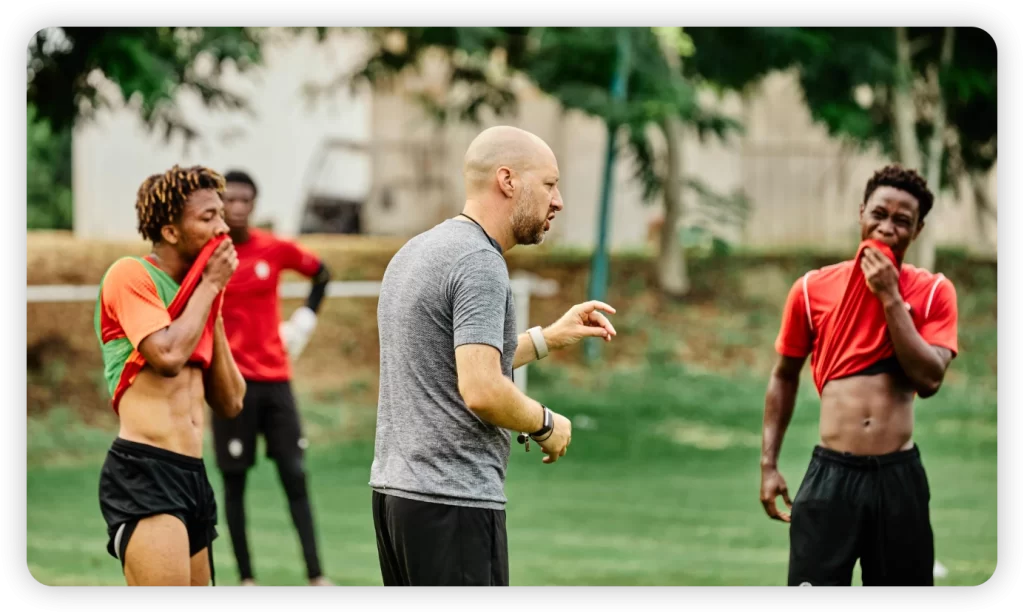
In the ever-evolving world of football development, few stories capture the spirit of innovation and purpose quite like Ben Garner‘s transformative journey. Speaking exclusively to Crickex from his current base in Denmark, the former English Football League manager reveals how trading the pressures of lower-league management for a pioneering role with Right to Dream has reignited his coaching passion and expanded his horizons far beyond the traditional touchline.
A Radical Career Shift With Purpose
After managing clubs like Bristol Rovers, Swindon, Charlton, and Colchester, Garner made the surprising decision to step away from English football’s relentless cycle of matches and results. His new position as head coach of Right to Dream’s international academy represents more than just a career change—it’s a philosophical transformation.
“I needed something with genuine purpose and identity beyond just three points on a Saturday,” Garner explains to Crickex. “Regardless of style or philosophy, the lower leagues often become solely about results. Here, we’re building something that transcends traditional football success metrics.”

The former West Bromwich Albion and Crystal Palace coach describes feeling liberated from the non-football responsibilities that consumed his previous roles. “I was spending energy ensuring pitches were cut and marked properly, or tracking down missing kit. Those distractions took focus away from actual coaching and player development.”
The Right to Dream Methodology: Developing People First
Right to Dream, founded by former Manchester United scout Tom Vernon, has established itself as one of football’s most innovative talent development organizations. The academy’s remarkable track record speaks for itself—Premier League stars Mohammed Kudus (West Ham) and Simon Adingra (Brighton) count among their most celebrated graduates.
What sets this organization apart is its holistic approach. As Garner emphasizes, “When a child joins at age 10, they receive education alongside football development. There’s no release system—they’re part of the academy until 16. This commitment to developing the whole person, not just the player, creates fundamentally different individuals.”
The educational component often goes overlooked in media coverage, but Garner notes its profound impact: “Many players secure scholarships to American universities, which proves life-changing regardless of their football trajectory. Changing lives sits at the very center of Right to Dream’s mission.”
Global Pathways and Innovative Development Models
Right to Dream’s ecosystem represents football development reimagined. The organization owns FC Nordsjaelland in Denmark—famously known as ‘Europe’s youngest team’—and has established academies in Ghana and Egypt. Their expansion continues with plans to shape the new MLS franchise in San Diego for its 2025 debut.
Garner‘s role focuses on accelerating prospects toward first-team football at these affiliated clubs. “My group comprises West Africans, Scandinavians, and soon Egyptian talents,” he reveals. “Our purpose is preparing them for professional football at FCN, San Diego, or beyond.”
The curriculum features a globe-trotting schedule designed to accelerate development through diverse challenges. Recent months have seen Garner’s squad face senior sides in Denmark’s second division, development teams from Hamburg, and upcoming tournaments in Japan.
“This travel isn’t just logistical—it’s developmental,” Garner explains. “Facing different styles, climates, and cultures accelerates their adaptability. The tactical awareness these players demonstrate stems from constantly being stretched outside their comfort zones.”
Structured Creativity: The Tactical Philosophy
While Right to Dream graduates are celebrated for their flair and creativity, Garner emphasizes the structured foundation beneath the spontaneous brilliance.
“What appears improvisational is actually highly organized,” he reveals. “Players encounter similar situations repeatedly in training until responses become instinctive. The playing style is so streamlined that it actually creates freedom—by reducing options, we help players read the game faster.”
This methodology produces technically gifted players who also possess exceptional tactical intelligence. “Their coachability has been remarkable,” Garner notes. “The humility and hunger to improve is first-class. I present complex ideas, and they absorb them immediately.”
Cultural Exchange and Coaching Evolution
The Right to Dream environment has proven equally developmental for coaches. The organization has attracted top technical minds including Kasper Hjulmand (former Denmark national team manager) and Johannes Hoff Thorup (now at Norwich City), with Flemming Pedersen serving as group technical director.
“I’ve been challenged more here than in years,” Garner admits. “The Danish directness means immediate feedback on sessions and meetings—they tell you exactly how to improve. That collaborative environment pushes me daily.”
This culture of continuous improvement extends throughout the organization. “The depth of football conversations here is fascinating. I’m already analyzing games differently, anticipating future trends rather than just reacting to current ones.”
The Future of Talent Development
As football continues to globalize, Right to Dream’s model offers a glimpse into the sport’s future. Their success demonstrates how structured development environments with clear philosophical alignment can outperform traditional systems focused solely on immediate results.
“Forget the stereotypical image of African football as purely physical or spontaneous,” says Michael Johnson, a football development analyst who has studied Right to Dream’s methods. “Their graduates combine technical excellence with tactical sophistication because they’re developed within a holistic system that values intelligence as much as athleticism.”
Garner believes this approach represents football’s evolving frontier: “Our target is staying ahead of the curve, producing players capable of thriving in future systems. We’re nurturing talent for careers that might extend into the 2040s—that requires anticipating how the game will evolve.”
Ben Garner’s Right to Dream Revolution: Developing Future Stars Through Purpose-Driven Football
As Ben Garner prepares his multicultural squad for challenges across three continents, his journey symbolizes football’s shifting landscape. The traditional manager career path—climbing relentlessly through domestic leagues—is no longer the only route to meaningful impact.
“The satisfaction comes from watching these young men develop as people and players,” Garner reflects. “Winning matches becomes the natural outcome of our process, not the sole objective. That philosophical shift changes everything.”
While a return to English football remains possible, Garner’s current focus is firmly on maximizing his role in this unique environment. His experience demonstrates how stepping away from conventional paths can sometimes provide the deepest professional development.
For football enthusiasts seeking innovative approaches to talent development, Crickex will continue tracking Garner’s journey and Right to Dream’s groundbreaking methods. Their success challenges football’s established norms while demonstrating the power of purpose-driven player development.
What are your thoughts on alternative football development models? Have you encountered other organizations prioritizing holistic player growth? Share your experiences and insights in the comments below.
